

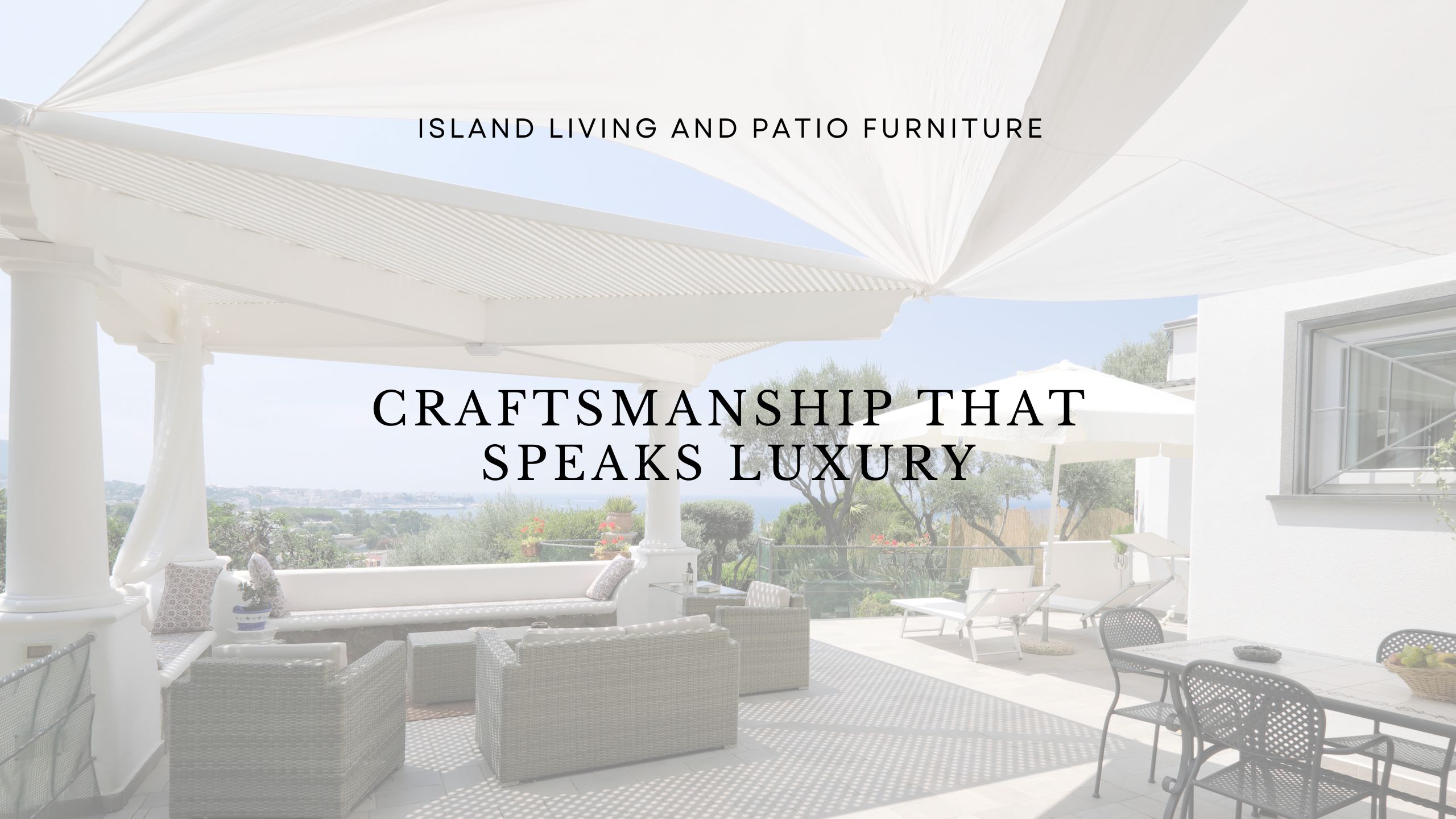
Pool Patio Furniture West Palm Beach | Island Living & Patio
Choosing Pool Patio Furniture for West Palm Beach’s Climate
Island Living & Patio guides West Palm Beach homeowners through selecting pool deck furniture engineered for South Florida’s salt air, intense UV exposure, and high humidity, with authorized collections from Brown Jordan, Castelle, Gloster, and Summer Classics that meet local HOA standards and withstand coastal water chemistry.
Pool patio furniture in West Palm Beach must survive conditions that destroy ordinary outdoor pieces within 18 months — year-round UV intensity averaging 10+ on the UV Index, salt-laden air from the Atlantic, chlorinated or salt water pool splash, and hurricane-force wind loads specified by Florida Building Code.[1] The right materials, frame construction, and cushion fabrics determine whether your investment lasts three years or thirty.
Written by The Island Living & Patio Team — 3x ICFA Apollo Award Finalist (2023–2025). Island Living & Patio has served as South Florida’s luxury outdoor furniture and design experts since 2005, with authorized dealerships for Brown Jordan, Castelle, Gloster, Lloyd Flanders, Summer Classics, TUUCI, and other premium brands from our West Palm Beach showroom.
What Materials Hold Up Best Around West Palm Beach Pools?
Marine-grade aluminum, powder-coated steel, synthetic wicker over aluminum frames, and solid teak deliver the longest service life in West Palm Beach pool environments, according to the International Casual Furnishings Association’s coastal durability standards.[2] Each material addresses specific South Florida challenges differently.
Marine-grade aluminum (5000 or 6000 series alloys) resists salt corrosion indefinitely and weighs 40–60% less than wrought iron, critical during hurricane preparation when you need to move or secure furniture quickly.[3] Brown Jordan and Castelle engineer their aluminum frames with welded joints and through-bolted construction that meet Florida’s 140+ mph wind zone requirements for Palm Beach County. Powder coating in UV-stable polyester provides color that won’t fade under the 4,200+ annual sunshine hours West Palm Beach receives.[4]
All-weather wicker — high-density polyethylene (HDPE) resin woven over aluminum frames — offers the visual warmth of natural materials with zero maintenance. Lloyd Flanders and Summer Classics use HDPE rated for 2,000+ UV hours without brittleness, and the open-weave construction drains water instantly after afternoon thunderstorms. Cushions dry within 90 minutes in typical West Palm Beach humidity (70–85% year-round) when using quick-dry foam cores wrapped in Sunbrella or Outdura solution-dyed acrylic fabrics.[5]
Solid teak contains natural oils (tectoquinone) that repel water and resist decay, making it the premium choice for pool deck furniture that will silver gracefully or maintain honey tones with annual sealing. Gloster sources plantation teak certified by the Forest Stewardship Council and engineers mortise-and-tenon joinery that remains stable through Florida’s wet and dry seasons.
How Does Salt Water vs. Chlorine Affect Pool Furniture?
Salt water pools generate chlorine through electrolysis, producing salt spray and residual sodium chloride that accelerates corrosion of ferrous metals and hardware, while traditional chlorine pools create acidic vapor that degrades inferior fabrics and finishes within two seasons.[6] Both systems demand furniture engineered specifically for chemical exposure.
Salt water systems maintain 2,500–3,500 ppm salinity — about one-tenth ocean concentration — but the constant salt mist deposits crystalline residue on nearby furniture. Stainless steel hardware (316 marine-grade) is mandatory; standard 304 stainless corrodes within 18 months in West Palm Beach salt water environments. Three Birds Casual and Castelle use 316 stainless exclusively in their coastal collections, with nylon or brass bushings at all pivot points to prevent galvanic corrosion between dissimilar metals.
Chlorine vapor (hypochlorous acid) attacks organic dyes and weakens polyester threads in budget outdoor fabrics. Solution-dyed acrylics like Sunbrella resist chlorine bleaching because pigment saturates the fiber during extrusion rather than being applied as a surface treatment. In comparative testing by the American Association of Textile Chemists and Colorists, solution-dyed fabrics retained 95%+ color fastness after 2,000 hours of combined UV and chlorine exposure versus 40% for piece-dyed alternatives.[7]
| Material | Salt Water Tolerance | Chlorine Resistance | Maintenance |
|---|---|---|---|
| Marine Aluminum | Excellent (indefinite) | Excellent | Rinse monthly |
| HDPE Wicker | Excellent | Excellent | Hose down quarterly |
| Powder-Coated Steel | Good (with 316 SS hardware) | Excellent | Inspect/touch up annually |
| Solid Teak | Excellent | Excellent | Oil annually or allow silvering |
| Sling Fabric (PVC-coated polyester) | Good | Very Good | Wipe weekly |
| Sunbrella/Solution-Dyed Acrylic | Excellent | Excellent | Machine wash seasonally |
What HOA Restrictions Apply to Pool Furniture in West Palm Beach Communities?
Homeowners associations in Ibis, Frenchman’s Reserve, Old Palm, and other Palm Beach County communities typically regulate furniture color palettes, visible storage, and percentage of hardscape coverage to maintain aesthetic continuity, with violation fines ranging from $100 to $500 per occurrence.[8] Review your community’s Declaration of Covenants, Conditions & Restrictions (CC&Rs) before purchasing.
Color restrictions most commonly limit pool furniture to neutral tones — white, beige, taupe, grey, and muted blues — with some communities prohibiting bright cushion fabrics visible from the street or neighboring properties. Island Living & Patio maintains a reference library of local HOA guidelines and works with West Palm Beach homeowners to select compliant palettes from brands offering 60+ colorways. Brown Jordan’s Tamiami collection and Castelle’s Resort Fusion line both provide extensive neutral options that satisfy strict architectural review boards.
Storage and seasonal coverage rules vary widely: some HOAs require pool furniture to be removed or covered with neutral-toned covers during hurricane season (June 1–November 30), while others mandate permanent storage structures that match home architecture. TUUCI’s retractable cantilever umbrellas and Pavilion’s folding daybeds address these requirements by allowing rapid setup and breakdown without compromising design.
Hardscape coverage limits — the percentage of pool deck occupied by furniture, planters, and accessories — typically range from 30% to 50% of total patio square footage to maintain open sight lines and emergency access. Our design service calculates coverage ratios during the layout phase, ensuring your sectional, chaise lounges, dining table, and umbrella configuration meets both HOA standards and Florida Building Code egress requirements.
How Do You Plan a Complete Pool Deck Furniture Layout?
Effective pool deck layouts balance four functional zones — sunbathing, dining, conversation, and shade — while maintaining 36-inch circulation paths and 8-foot clearances from pool coping as required by Palm Beach County building codes.[1] Island Living & Patio’s design service maps these zones using your pool dimensions, sun orientation, and prevailing wind patterns.
Sun orientation drives furniture placement in South Florida: west-facing pool decks receive intense afternoon sun from 2 PM to 7 PM, requiring substantial shade structures (10–13-foot cantilever umbrellas or permanent pavilions) over dining and conversation areas. East-facing decks enjoy morning sun and afternoon shade from the home itself, allowing more flexible furniture arrangements. Our designers conduct on-site solar analysis using the National Renewable Energy Laboratory’s sun path calculator to position TUUCI umbrellas for optimal coverage during your preferred entertainment hours.[4]
Prevailing southeast winds (8–12 mph average in West Palm Beach) affect umbrella stability and cushion security. We specify weighted bases (150–200 pounds for cantilever umbrellas) or in-ground mounting sleeves, and recommend Three Birds Casual’s strap-secured cushions for chaise lounges in exposed positions. Conversation seating performs best on the leeward side of the pool, typically north or west walls, where wind turbulence is minimal.
Typical 400–600 square foot West Palm Beach pool decks accommodate a standard layout: two chaise lounges with side tables (sunbathing zone, 80 sq ft), four-seat dining set under umbrella (dining zone, 100 sq ft), and curved sectional or loveseat pair with cocktail table (conversation zone, 120 sq ft), leaving 100–300 sq ft for circulation and pool access. Larger estates (800+ sq ft decks) add daybeds, bar carts, and supplementary shade structures.
Ready to design your ideal pool environment? Visit our West Palm Beach showroom or call (561) 683-7373 for a free design consultation. Our designers help you select the right pieces, materials, and layout for your home.
Which Brands Offer the Best Warranties for Florida Coastal Conditions?
Premium manufacturers provide 3–10 year warranties on frames and 2–5 years on fabrics specifically validated for coastal environments, versus the 1–2 year coverage typical of mass-market brands.[2] Warranty terms reveal engineering confidence and long-term value.
Brown Jordan backs their aluminum frames with a 10-year warranty against structural failure and corrosion, the industry’s longest coverage, reflecting seven decades of coastal manufacturing expertise. Castelle offers 6-year frame coverage and 3-year finish warranties, with documented performance in South Florida installations dating to the 1980s. Summer Classics provides 5-year comprehensive coverage including weave integrity on their wicker collections, with expedited parts replacement for storm damage — critical when hurricane-force winds detach woven panels.
Fabric warranties differentiate by fiber type and construction: Sunbrella’s 5-year warranty covers fade and mildew resistance specifically in “extreme environments including coastal regions,” while generic outdoor fabrics typically exclude salt air exposure from coverage. Lloyd Flanders cushions use Sunbrella exclusively and include quick-dry foam cores under their 2-year cushion warranty, addressing both longevity and daily usability in afternoon-thunderstorm climates.
Gloster’s teak warranty (3 years) covers splitting and joint failure but explicitly allows natural silvering — the patina that develops over 6–18 months of UV exposure — as an expected characteristic rather than a defect. This distinction matters in West Palm Beach, where year-round sun accelerates weathering; homeowners choosing teak should understand maintenance requirements or embrace the aged aesthetic.
What Maintenance Extends Furniture Life in West Palm Beach?
Monthly rinsing with fresh water removes 90% of salt and chlorine residue, preventing the crystalline buildup that accelerates corrosion and fabric degradation, according to ICFA coastal maintenance protocols.[2] Seasonal deep cleaning and annual inspections catch minor issues before they require replacement.
Aluminum and wicker frames need only monthly hose-down (no pressure washer — high pressure forces water into weave gaps and bearing assemblies). For visible salt deposits, mix 1/4 cup mild dish soap per gallon of water and scrub with a soft brush, then rinse thoroughly. Apply automotive paste wax to powder-coated finishes every 6 months to restore gloss and add a protective layer against UV degradation.
Cushions and sling fabrics benefit from machine washing (cold water, mild detergent, air dry) twice per season. Remove cushions during extended absences — trapped moisture under Florida’s summer humidity breeds mildew even on treated fabrics. Store cushions in breathable canvas bags rather than plastic bins, which trap condensation. Sunbrella offers proprietary cleaning solutions (303 Fabric Cleaner) that restore water repellency after 12–18 months of weathering.
Annual inspections should check stainless steel hardware for pitting (early corrosion indicator), umbrella crank mechanisms for smooth operation, and frame joints for looseness. Tighten bolts to manufacturer specs using a torque wrench — over-tightening cracks powder coating and creates moisture entry points. Replace any damaged glides or levelers immediately; uneven weight distribution stresses joints and accelerates wear.
Frequently Asked Questions
How much should I budget for quality pool patio furniture in West Palm Beach?
Quality coastal-rated pool furniture ranges from $4,000 to $15,000 for a complete deck layout including seating, dining, and shade structures. A typical setup includes two premium chaise lounges ($800–$1,500 each), a four-seat dining set ($2,500–$5,000), conversation seating ($2,000–$4,000), and a commercial-grade cantilever umbrella ($1,500–$3,500). Brands engineered for South Florida conditions cost 40–60% more than big-box alternatives but deliver 5–10 times the service life, making them more economical over a 10-year ownership period.
Can I leave pool furniture out during hurricane season in Palm Beach County?
Florida Building Code requires securing or removing outdoor furniture when winds exceed 40 mph, and Palm Beach County issues evacuation orders 48–72 hours before hurricane landfall.[1] Lightweight aluminum pieces (under 30 pounds) must be stored indoors or in a secured structure. Heavier sectionals and dining sets can remain on-deck if you remove cushions and umbrellas, move furniture against the home’s leeward wall, and use ratchet straps anchored to ground embedments. Our team provides hurricane prep checklists specific to your furniture configuration.
What’s the difference between contract-grade and residential outdoor furniture?
Contract-grade (also called commercial or hospitality-grade) furniture meets ASTM and BIFMA testing standards for high-use environments — 250+ pound load capacity, 50,000+ cycle testing on moving parts, and accelerated weathering equivalent to 10+ years of daily exposure.[2] Residential-grade furniture typically omits these certifications and uses thinner gauge aluminum and lighter-duty fabrics. For West Palm Beach pool decks, we recommend contract-grade frames with residential cushioning, balancing durability and comfort.
Do I need special cushions for a salt water pool deck?
Salt water pools require cushions with solution-dyed acrylic covers (Sunbrella, Outdura) and closed-cell foam cores that resist water absorption and salt intrusion. Standard polyester-filled cushions absorb salt spray, which draws atmospheric moisture and creates permanent dampness even in low humidity. Quick-dry foam cores (Dryfast, Poron) expel water within 90 minutes and prevent the mildew growth common on West Palm Beach pool furniture.
How do I choose furniture colors that won’t fade in Florida sun?
Select solution-dyed fabrics rated for 1,500+ UV hours (Sunbrella’s testing standard) and powder-coated frames using UV-stable polyester or TGIC-based finishes. Lighter colors (white, beige, light grey) reflect heat and show less fading than dark tones, which absorb UV energy and degrade faster. Performance pigments like titanium dioxide and ceramic microspheres enhance fade resistance — look for these in manufacturer specifications. Avoid any fabric or finish labeled “for covered areas only” in South Florida’s intense sun.
Create a pool deck that enhances your South Florida lifestyle for decades. Visit Island Living & Patio’s West Palm Beach showroom or call (561) 683-7373 to start your complimentary design consultation today.
Written by The Island Living & Patio Team — 3x ICFA Apollo Award Finalist (2023–2025). Updated May 2026.
References
- Florida Building Code, 7th Edition (2020). Section 1609: Wind Loads. https://floridabuilding.org/c/default.aspx
- International Casual Furnishings Association. Outdoor Furniture Performance Standards and Coastal Durability Guidelines. https://www.casualfurnishings.org/
- Aluminum Association. Marine-Grade Aluminum Alloy Guide (5000 & 6000 Series). https://www.aluminum.org/
- National Oceanic and Atmospheric Administration (NOAA). West Palm Beach Climate Summary: Annual Sunshine Hours and UV Index Data. https://www.ncdc.noaa.gov/
- American Society for Testing and Materials (ASTM). ASTM D4329: Standard Practice for Fluorescent UV Exposure of Plastics. https://www.astm.org/
- University of Florida IFAS Extension. Salt Water Pool Systems: Chemistry and Corrosion Management. https://edis.ifas.ufl.edu/
- American Association of Textile Chemists and Colorists (AATCC). AATCC Test Method 16: Colorfastness to Light. https://www.aatcc.org/
- Florida Statutes Title XL, Chapter 720: Homeowners’ Associations (Declaration of Covenants, Conditions, and Restrictions). http://www.leg.state.fl.us/statutes/